

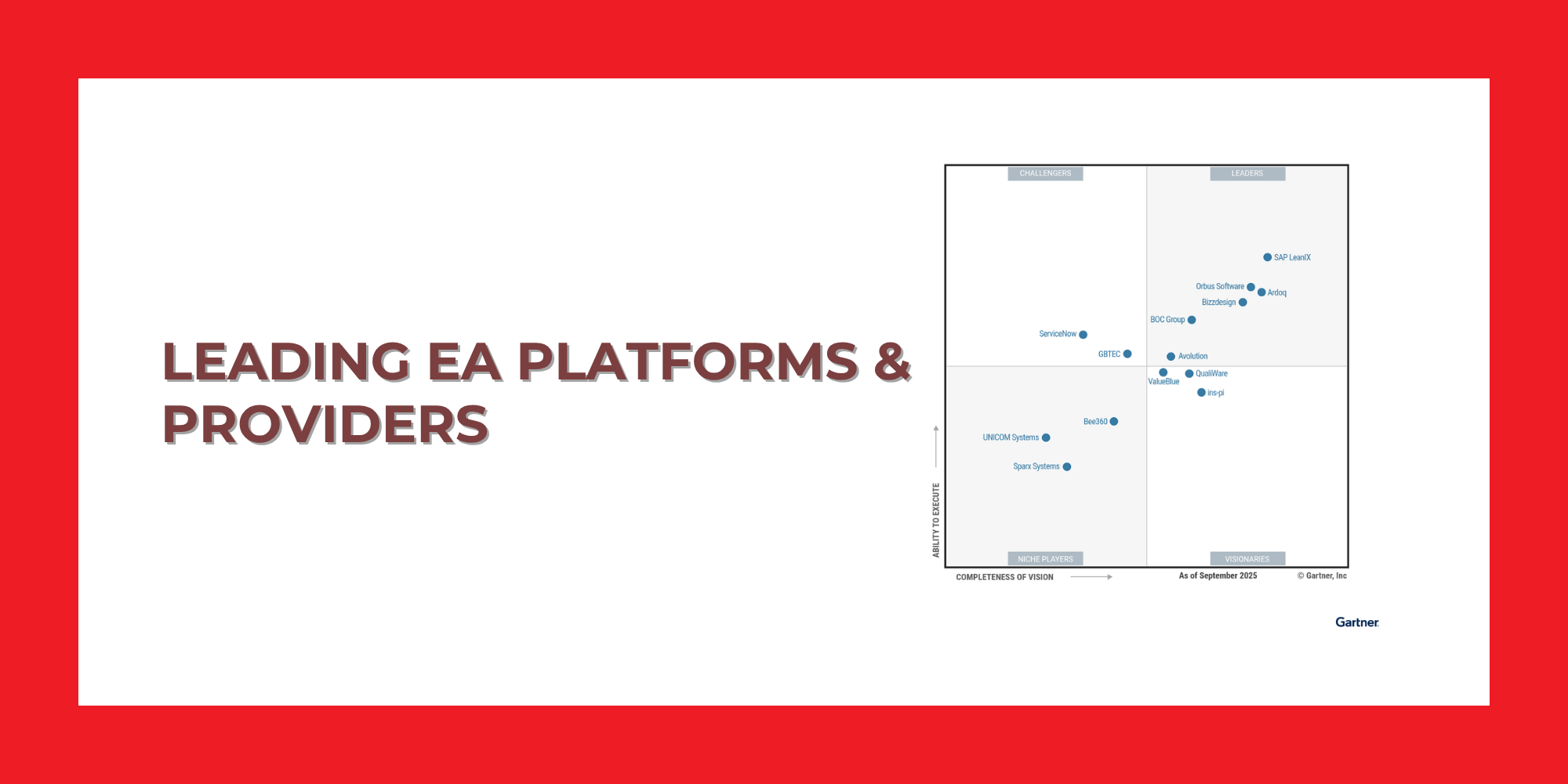
Enterprise Architecture Tools: Leading EA Platforms & Providers

August 12, 2026
As organisations accelerate digital and AI transformation, understanding the relationships between business capabilities, processes, applications, data and technology becomes increasingly important.
Enterprise Architecture (EA) tools provide organisations with a structured way to capture, visualise and analyse these relationships. Instead of managing architecture information across disconnected spreadsheets, diagrams, and documents, EA platforms can establish a central architecture repository that supports better planning, governance, and transformation decisions.
However, selecting an Enterprise Architecture tool is not simply a technology decision. Organisations need to consider their architecture maturity, business objectives, existing technology landscape, governance requirements, and the outcomes they expect the platform to support.
ATD Solution works with leading Enterprise Architecture tool providers to help organisations select, implement and adopt EA platforms that support their transformation priorities.
Enterprise Architecture tools are software platforms that help organisations understand how different parts of the enterprise are connected.
They provide a central repository for architecture information covering areas such as:
By connecting these architecture elements, organisations can create different models and viewpoints to understand their current environment, identify dependencies, and plan future changes.
Gartner describes EA tools as supporting the modelling and planning of the future enterprise, including the evolution of business, operating and technology models.
The value of an EA tool therefore extends beyond architecture documentation. When implemented effectively, it can provide greater visibility into the enterprise and support more informed transformation decisions.
As organisations grow, their business and technology environments become increasingly complex.
Applications may overlap. Technologies may become obsolete. Different transformation programmes may depend on the same capabilities or data. Business and technology teams may also maintain different views of the organisation.
Without a connected view of these relationships, decision-makers can struggle to understand the wider impact of change.
Enterprise Architecture tools can help organisations:
Create a connected view of business capabilities, processes, applications, data and technologies to better understand the current enterprise landscape.
Connect technology investments and transformation initiatives with business capabilities, strategic objectives and organisational priorities.
Understand dependencies and potential impacts before making significant changes to applications, technologies or business capabilities.
Identify duplicated applications, ageing technologies, capability gaps and other areas that may create unnecessary cost or transformation risk.
Establish a common architecture repository and structured approach for maintaining architecture information, standards and decisions.
Use architecture information to understand the current state, define the desired future state and develop practical transition roadmaps.
The Enterprise Architecture tools market includes platforms with different strengths, capabilities and approaches.
ATD Solution works with leading EA technology providers to support different organisational and architecture requirements.
Its flexible metamodel allows organisations to adapt the platform to different architecture frameworks and methodologies rather than being restricted to a single approach.
ABACUS can support organisations seeking capabilities across areas such as:
Its portfolio includes capabilities originating from platforms such as Horizzon, Alfabet and HOPEX, providing organisations with options across Enterprise Architecture, portfolio management and transformation management.
Bizzdesign can support areas including:
For larger organisations managing complex transformation portfolios, these capabilities can help create greater visibility between strategic priorities and the architecture supporting them.
It supports architecture teams in creating connected views across business and technology while providing capabilities for analysis and transformation planning.
Typical areas of application include:
The platform supports organisations in connecting architecture information with transformation initiatives and communicating architecture insights to stakeholders.
Its capabilities include areas such as:
Its integration with the Microsoft ecosystem can also be relevant to organisations that rely extensively on Microsoft technologies for collaboration and productivity.
The platform is commonly used to support application portfolio management, technology risk management and transformation initiatives.
SAP LeanIX can support organisations in areas including:
Its ecosystem can also make it relevant for organisations undertaking broader SAP transformation, application modernisation and technology rationalisation initiatives.
There is no single EA platform that is automatically the best choice for every organisation.
The right platform depends on what the organisation needs Enterprise Architecture to achieve.
Before selecting an EA tool, organisations should consider several factors.
Start with the outcomes the organisation wants to achieve.
Is the priority application rationalisation? Business transformation? Technology risk management? Architecture governance? Cloud transformation? AI transformation?
The required outcome should guide the platform requirements.
An organisation establishing its first formal EA practice may have very different requirements from an organisation with an established architecture repository, governance structure and architecture team.
The platform should support the organisation’s current maturity while providing room for future development.
Consider whether the tool supports the architecture methodologies, frameworks and modelling standards used by your organisation.
Depending on the organisation, these may include TOGAF®, ArchiMate®, BPMN or organisation-specific architecture methodologies.
An EA platform is only as valuable as the architecture information it contains.
Organisations should evaluate how easily architecture information can be collected, maintained, governed and connected across different domains.
Enterprise Architecture does not operate independently from the rest of the technology environment.
Consider how the platform integrates with existing systems and data sources such as CMDBs, project management platforms, process management tools and other enterprise systems.
Beyond documenting architecture, the platform should help decision-makers understand dependencies, risks, opportunities and transformation scenarios.
Reporting, dashboards, impact analysis and scenario planning can therefore be important selection criteria.
Even a technically powerful EA platform will struggle to deliver value if stakeholders do not use it.
Consider how easily architects and non-architect stakeholders can contribute information, access relevant insights and use architecture outputs to support decisions.
A common mistake is to treat EA platform implementation primarily as a software deployment.
Purchasing the technology does not automatically create an effective Enterprise Architecture capability.
Before implementation, organisations need to determine what information should be captured, how different architecture elements relate to one another, who owns the information and how the platform will support architecture and transformation decisions.
Without this foundation, an EA repository can quickly become another source of outdated information rather than a trusted source of enterprise insight.
Successful EA platform adoption therefore requires the right combination of people, processes, architecture methodology, governance, data and technology.
ATD Solution’s EA platform adoption services help organisations move from tool selection to effective implementation and adoption.
Our approach focuses on aligning the platform with the organisation’s architecture maturity, transformation objectives and operating environment.
Support can include:
The objective is not simply to implement an EA tool, but to establish a sustainable architecture capability that helps the organisation make better transformation decisions.
Enterprise Architecture tools can provide organisations with greater visibility into their business and technology landscape, but technology alone is not enough.
The real value comes from connecting architecture information with the decisions the organisation needs to make.
Whether your organisation is establishing an EA practice, replacing an existing platform or looking to improve the value of its current EA repository, selecting and implementing the right approach is critical.
ATD Solution combines Enterprise Architecture consulting, platform implementation and architecture competency development to help organisations establish and mature their EA capabilities.
Explore Our Enterprise Architecture Tool Partners
Discover the EA platforms supported by ATD Solution and learn how different solutions can support your organisation’s architecture and transformation requirements.
Speak to an Enterprise Architecture Specialist
Need help determining which EA platform is right for your organisation? Speak with our specialists to assess your requirements and identify an appropriate approach for your Enterprise Architecture journey.
Source: Gartner, Magic Quadrant for Enterprise Architecture Tools, 2025.
Enterprise Architecture (EA) tools provide organisations with a structured way to capture, visualise and analyse these relationships. Instead of managing architecture information across disconnected spreadsheets, diagrams, and documents, EA platforms can establish a central architecture repository that supports better planning, governance, and transformation decisions.
However, selecting an Enterprise Architecture tool is not simply a technology decision. Organisations need to consider their architecture maturity, business objectives, existing technology landscape, governance requirements, and the outcomes they expect the platform to support.
ATD Solution works with leading Enterprise Architecture tool providers to help organisations select, implement and adopt EA platforms that support their transformation priorities.
What Are Enterprise Architecture Tools?
Enterprise Architecture tools are software platforms that help organisations understand how different parts of the enterprise are connected.
They provide a central repository for architecture information covering areas such as:
- Business capabilities
- Business processes
- Applications
- Data and information
- Technologies
- Organisational structures
- Transformation initiatives
- Projects and programmes
By connecting these architecture elements, organisations can create different models and viewpoints to understand their current environment, identify dependencies, and plan future changes.
Gartner describes EA tools as supporting the modelling and planning of the future enterprise, including the evolution of business, operating and technology models.
The value of an EA tool therefore extends beyond architecture documentation. When implemented effectively, it can provide greater visibility into the enterprise and support more informed transformation decisions.
Why Do Organisations Need Enterprise Architecture Tools?
As organisations grow, their business and technology environments become increasingly complex.
Applications may overlap. Technologies may become obsolete. Different transformation programmes may depend on the same capabilities or data. Business and technology teams may also maintain different views of the organisation.
Without a connected view of these relationships, decision-makers can struggle to understand the wider impact of change.
Enterprise Architecture tools can help organisations:
Improve Enterprise Visibility
Create a connected view of business capabilities, processes, applications, data and technologies to better understand the current enterprise landscape.
Align Business and Technology
Connect technology investments and transformation initiatives with business capabilities, strategic objectives and organisational priorities.
Support Transformation Planning
Understand dependencies and potential impacts before making significant changes to applications, technologies or business capabilities.
Identify Risks and Redundancies
Identify duplicated applications, ageing technologies, capability gaps and other areas that may create unnecessary cost or transformation risk.
Strengthen Architecture Governance
Establish a common architecture repository and structured approach for maintaining architecture information, standards and decisions.
Develop Transformation Roadmaps
Use architecture information to understand the current state, define the desired future state and develop practical transition roadmaps.
Leading Enterprise Architecture Tools
The Enterprise Architecture tools market includes platforms with different strengths, capabilities and approaches.
ATD Solution works with leading EA technology providers to support different organisational and architecture requirements.
-
Avolution ABACUS
Its flexible metamodel allows organisations to adapt the platform to different architecture frameworks and methodologies rather than being restricted to a single approach.
ABACUS can support organisations seeking capabilities across areas such as:
- Enterprise Architecture modelling
- Business Architecture
- Application portfolio management
- Technology portfolio management
- Strategy and transformation modelling
- Architecture analytics and reporting
- Roadmapping and scenario analysis
-
Bizzdesign
Its portfolio includes capabilities originating from platforms such as Horizzon, Alfabet and HOPEX, providing organisations with options across Enterprise Architecture, portfolio management and transformation management.
Bizzdesign can support areas including:
- Enterprise Architecture
- Business Architecture
- Application portfolio management
- Technology portfolio management
- Strategy execution
- Transformation planning
- Risk and impact analysis
For larger organisations managing complex transformation portfolios, these capabilities can help create greater visibility between strategic priorities and the architecture supporting them.
-
BOC Group ADOIT
It supports architecture teams in creating connected views across business and technology while providing capabilities for analysis and transformation planning.
Typical areas of application include:
- Enterprise Architecture modelling
- Business capability management
- Application architecture
- Technology architecture
- Architecture roadmapping
- Analysis and reporting
-
Orbus Infinity
The platform supports organisations in connecting architecture information with transformation initiatives and communicating architecture insights to stakeholders.
Its capabilities include areas such as:
- Enterprise Architecture
- Business Architecture
- Application portfolio management
- Technology management
- Transformation planning
- Architecture visualisation
- Collaboration and reporting
Its integration with the Microsoft ecosystem can also be relevant to organisations that rely extensively on Microsoft technologies for collaboration and productivity.
-
SAP LeanIX
The platform is commonly used to support application portfolio management, technology risk management and transformation initiatives.
SAP LeanIX can support organisations in areas including:
- Enterprise Architecture management
- Application portfolio management
- Technology risk and lifecycle management
- Architecture governance
- Transformation planning
- Application modernisation
- Architecture reporting and visualisation
Its ecosystem can also make it relevant for organisations undertaking broader SAP transformation, application modernisation and technology rationalisation initiatives.
How to Choose the Right Enterprise Architecture Tool
There is no single EA platform that is automatically the best choice for every organisation.
The right platform depends on what the organisation needs Enterprise Architecture to achieve.
Before selecting an EA tool, organisations should consider several factors.
1. Business and Transformation Objectives
Start with the outcomes the organisation wants to achieve.
Is the priority application rationalisation? Business transformation? Technology risk management? Architecture governance? Cloud transformation? AI transformation?
The required outcome should guide the platform requirements.
2. Enterprise Architecture Maturity
An organisation establishing its first formal EA practice may have very different requirements from an organisation with an established architecture repository, governance structure and architecture team.
The platform should support the organisation’s current maturity while providing room for future development.
3. Modelling and Framework Support
Consider whether the tool supports the architecture methodologies, frameworks and modelling standards used by your organisation.
Depending on the organisation, these may include TOGAF®, ArchiMate®, BPMN or organisation-specific architecture methodologies.
4. Repository and Data Management
An EA platform is only as valuable as the architecture information it contains.
Organisations should evaluate how easily architecture information can be collected, maintained, governed and connected across different domains.
5. Integration Capabilities
Enterprise Architecture does not operate independently from the rest of the technology environment.
Consider how the platform integrates with existing systems and data sources such as CMDBs, project management platforms, process management tools and other enterprise systems.
6. Analytics and Decision Support
Beyond documenting architecture, the platform should help decision-makers understand dependencies, risks, opportunities and transformation scenarios.
Reporting, dashboards, impact analysis and scenario planning can therefore be important selection criteria.
7. Usability and Stakeholder Adoption
Even a technically powerful EA platform will struggle to deliver value if stakeholders do not use it.
Consider how easily architects and non-architect stakeholders can contribute information, access relevant insights and use architecture outputs to support decisions.
Selecting an EA Tool Is Only the Beginning
A common mistake is to treat EA platform implementation primarily as a software deployment.
Purchasing the technology does not automatically create an effective Enterprise Architecture capability.
Before implementation, organisations need to determine what information should be captured, how different architecture elements relate to one another, who owns the information and how the platform will support architecture and transformation decisions.
Without this foundation, an EA repository can quickly become another source of outdated information rather than a trusted source of enterprise insight.
Successful EA platform adoption therefore requires the right combination of people, processes, architecture methodology, governance, data and technology.
Enterprise Architecture Tool Implementation & Adoption
ATD Solution’s EA platform adoption services help organisations move from tool selection to effective implementation and adoption.
Our approach focuses on aligning the platform with the organisation’s architecture maturity, transformation objectives and operating environment.
Support can include:
- Assessing the current Enterprise Architecture and technology landscape
- Defining EA platform requirements and use cases
- Evaluating suitable EA platforms
- Establishing the architecture metamodel and repository structure
- Developing an EA platform adoption roadmap
- Configuring and implementing the selected platform
- Integrating the platform with relevant systems and data sources
- Establishing architecture governance and ownership
- Supporting stakeholder onboarding and adoption
- Building internal architecture competencies
- Continuously improving the EA practice and platform
The objective is not simply to implement an EA tool, but to establish a sustainable architecture capability that helps the organisation make better transformation decisions.
Turn Your EA Platform into a Transformation Enabler
Enterprise Architecture tools can provide organisations with greater visibility into their business and technology landscape, but technology alone is not enough.
The real value comes from connecting architecture information with the decisions the organisation needs to make.
Whether your organisation is establishing an EA practice, replacing an existing platform or looking to improve the value of its current EA repository, selecting and implementing the right approach is critical.
ATD Solution combines Enterprise Architecture consulting, platform implementation and architecture competency development to help organisations establish and mature their EA capabilities.
Explore Our Enterprise Architecture Tool Partners
Discover the EA platforms supported by ATD Solution and learn how different solutions can support your organisation’s architecture and transformation requirements.
Speak to an Enterprise Architecture Specialist
Need help determining which EA platform is right for your organisation? Speak with our specialists to assess your requirements and identify an appropriate approach for your Enterprise Architecture journey.
Source: Gartner, Magic Quadrant for Enterprise Architecture Tools, 2025.


